
You can tell a lot about how an AI rollout is going by what people aren't saying. Not the official narrative — the town halls, the transformation roadmap, the CEO's blog post about "embracing the future." The other thing. The quiet, strange mix of confusion, anticipation, and fear that settles over an organization when everyone knows something big is happening and nobody's been told what it means. That silence isn't just a morale problem. It's a leading indicator that the organization doesn't have the resilient systems to absorb what's coming — and that the investment the board just approved is about to underperform in ways nobody's measuring yet.
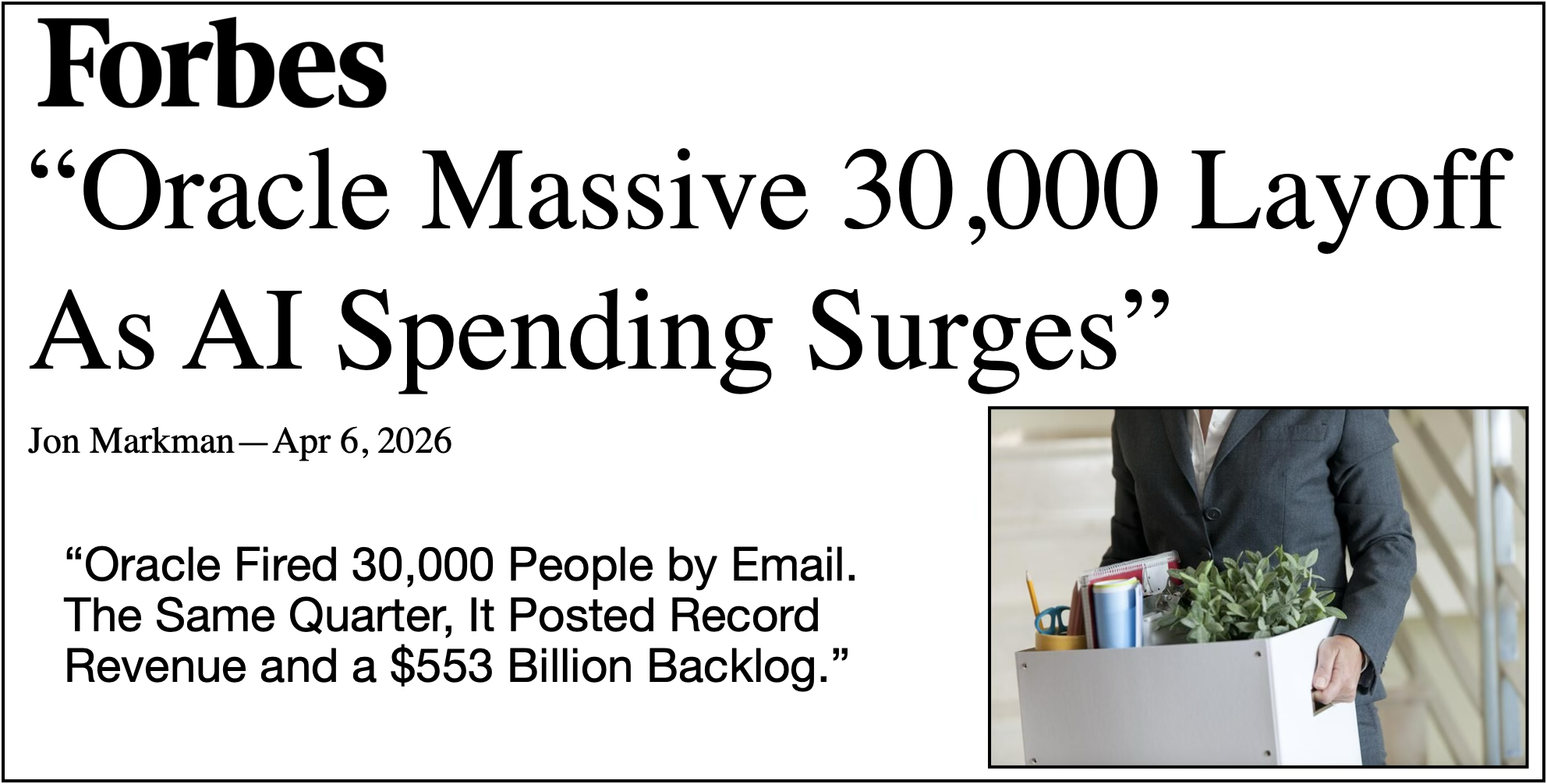
The pressure is real. There's a monumental FOMO propagating from boardroom to boardroom: if you're not at the AI table, you're on the menu. So companies are racing to get there — cutting headcount, redirecting budgets, standing up AI initiatives — sometimes before anyone has asked whether the organization is actually ready to use what it's buying. And some of the people being shown the door are the ones who knew how the unwritten systems worked. Not the org chart systems — the real ones. How decisions actually got made, where the information actually lived, which relationships held the cross-team handoffs together. That institutional knowledge wasn't documented because it never had to be. Now it's walking out the building with a cardboard box, and the AI that's supposed to replace it has no idea it ever existed.
Here's the thing most AI strategies skip over entirely: every organization runs on two sets of systems. There's the official version — the org chart, the accountability framework, the governance model in the wiki nobody opens. And then there's the real one. Who actually makes decisions. Where information actually flows. Who the unacknowledged influencers and information hubs are. Whether people can openly disagree in a meeting and have it treated as a contribution rather than a problem. That second set of systems is the one that determines whether the organization can actually deliver — and almost none of it is written down.
None of this is new. Organizations have been dropping technology into broken systems for decades and calling it transformation. Cloud migration, DevOps, microservices — you could bumble through those because they were containable. A bad cloud migration affected your infrastructure team. A botched DevOps rollout slowed delivery. The blast radius was limited, and the informal human networks that actually run the place had time to adapt and compensate. AI is different. It has the potential to touch every team, every workflow, every decision-maker — and when it scales, it does so simultaneously. It moves fast enough that those informal correction mechanisms — the ones that have been quietly saving your organization from itself for years — can't keep up.
This isn't speculation. The research has been saying the same thing for as long as anyone's been tracking it. The Standish Group has tracked over 500,000 IT projects since their first CHAOS report in 1994. Back then, 31% of projects were cancelled outright and only 16% were delivered on time and on budget. Their 2020 report — 50,000 projects later — found 69% still ending in partial or total failure. The number barely moved in three decades of better tools, better methodologies, and better intentions.
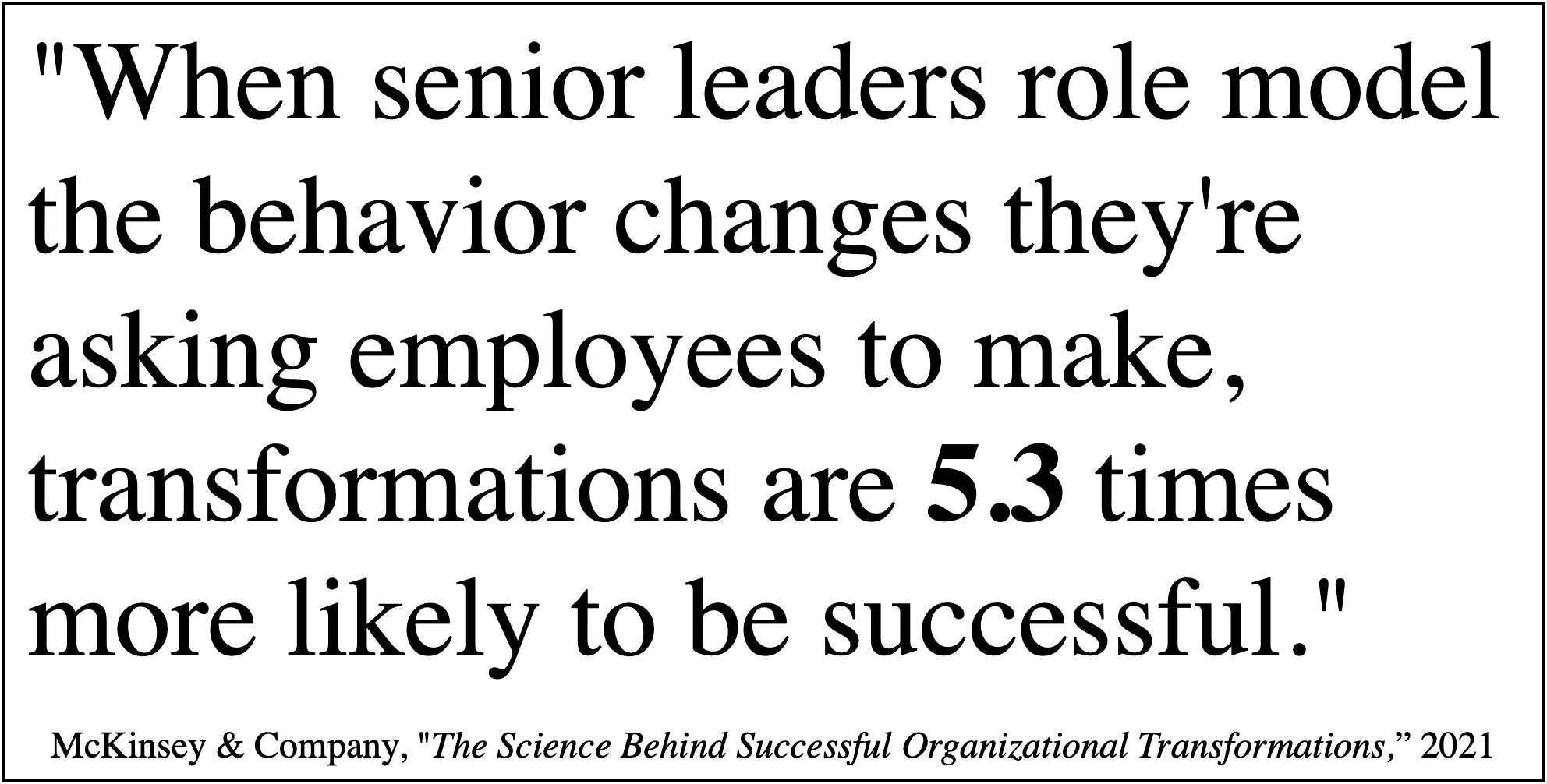
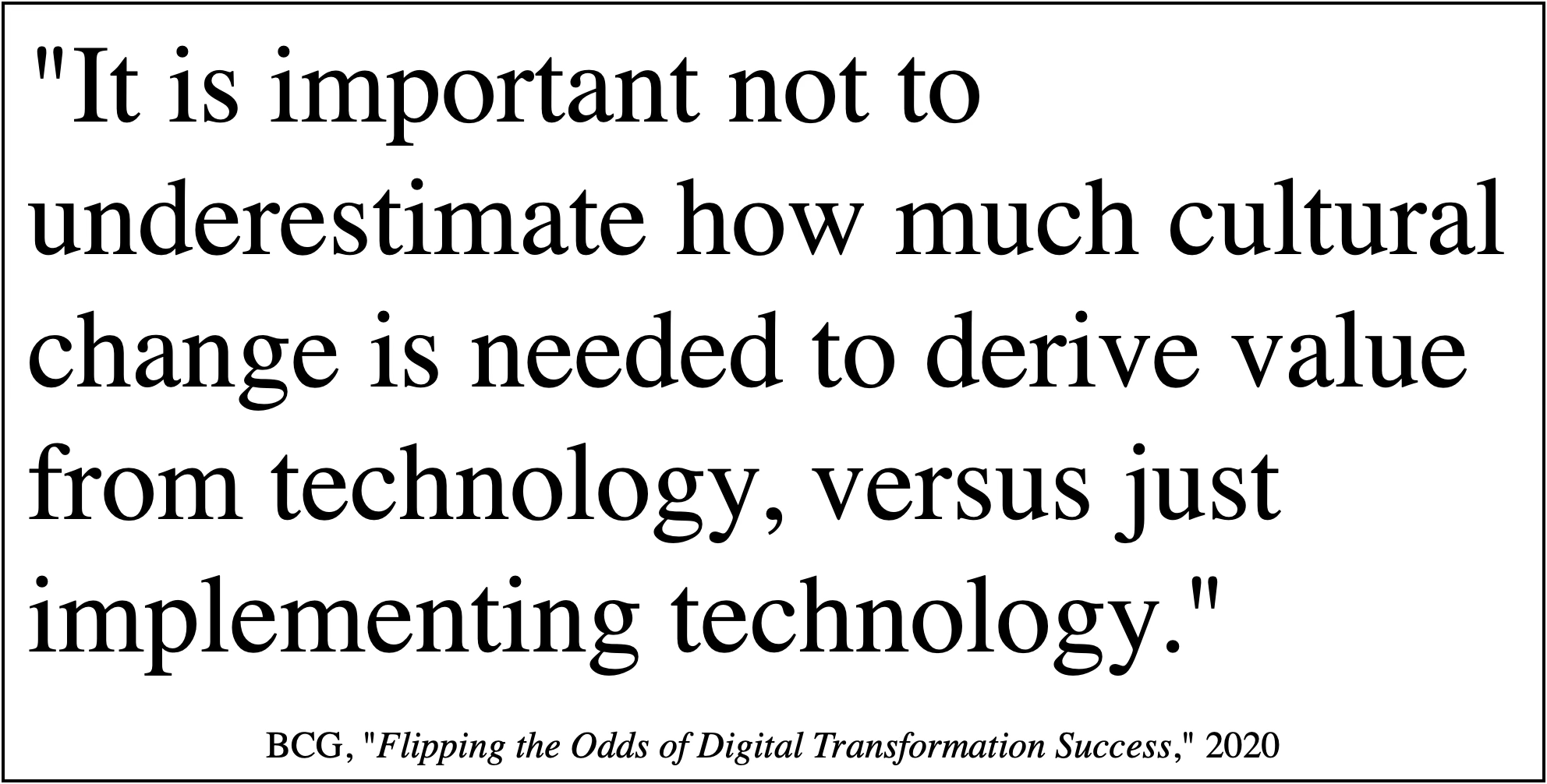
Digital transformation tells the same story. BCG studied 900 transformations and found only 30% met their targets. McKinsey puts the failure rate at 70%. And here's the detail that should make every board member uncomfortable: McKinsey also found that transformations where senior leaders actively role-modeled the behavior changes they were asking of the organization were 5.3 times more likely to succeed. Not marginally more. Five times more. One of the strongest predictors of success wasn't the technology. It was whether leadership actually changed how they operated.
Now look at AI specifically. An MIT study found that 95% of generative AI pilots failed to deliver measurable impact. Across all AI initiatives, the overall failure rate sits above 80% by some estimates — twice the rate of traditional IT projects. Companies are abandoning AI initiatives at more than double the rate they were just a year ago. And early data from a 2026 analysis of over 2,400 enterprise AI initiatives confirms exactly what you'd expect: projects with clear pre-approval success metrics succeed at 54% versus 12% without them. Sustained executive sponsorship: 68% versus 11%. The pattern isn't subtle.
And those are the reported numbers. They don't count the initiatives that quietly moved the goalposts mid-flight and called it a win.
The technology was never the problem. It almost never is. Yes, your data infrastructure has to work — if the plumbing doesn't deliver clean water, nothing downstream matters. But in most organizations chasing AI, the plumbing is fine — and if it isn't, you likely already know it and are working that problem. This series is about the one that's harder to see. What every one of those failed initiatives has in common is an organization that wasn't ready to absorb the change — and leadership that didn't realize it, or didn't want to. The organizational operating systems that determine whether a transformation succeeds or fails aren't in the tech stack. They're in how the organization actually runs. Can people trust each other enough to be honest about what's not working? Is there real accountability, or just org-chart accountability? When someone disagrees with the direction, is that treated as insight or insubordination?
If you want to know whether an organization is ready for AI, don't start with the tech stack. Start with the meetings. Are there productive disagreements? Not performative ones — real ones, where someone pushes back on a direction and the room treats it as useful information rather than a threat. And not behind closed doors — in front of the team, where everyone hears the reasoning, the tradeoffs, the context behind the decision. Even when the disagreement doesn't change the direction, the team walks away understanding why.
That shared context is the thing that makes every subsequent decision better. And it's the thing that determines whether AI tools are useful or just fast. You can absolutely give an LLM the context it needs to do good work — but only if the person at the keyboard actually has that context themselves. If disagreements never happen, if they happen behind closed doors, if the reasoning stays in someone's head, if the team never hears the why — then the people directing the AI tools are working with an incomplete picture. And so is the AI.
Without that foundation, everything downstream falls apart in recognizable patterns. If people can't be honest, accountability becomes theater — technically assigned but never real. Without real accountability, teams optimize locally instead of aligning across the organization. Without alignment, metrics become political tools — gamed by one stakeholder or another to tell whatever story protects their budget. Without trustworthy metrics, information distribution breaks down. And without clean information flow, decisions get made by whoever has positional authority rather than whoever has the actual insight. The boss decides, because the person three levels down who knows something critical never had a safe way to say it.
That's the organizational operating system AI is landing on top of. And AI doesn't just inherit those problems — it accelerates them, extends their reach, and makes them harder to unwind. A bad decision used to stay in one silo until someone caught it. Now it propagates across teams at machine speed, informs automated workflows nobody's reviewing, and generates confident-sounding outputs that make the underlying dysfunction invisible — until it surfaces as a missed quarter, a compliance exposure nobody saw coming, or a strategic bet that looked data-driven but was built on data nobody trusted in the first place.
Dropping AI into an organization without coherent systems around it is like bolting a jet engine onto a soap box racer. It doesn't matter how powerful the engine is if the frame can't handle the thrust, the wheels can't hold the road, and nobody's built the steering to handle that kind of speed. You won't go faster. You'll just go off the cliff quicker.

Remember the person who walked out the building with a cardboard box? The one who knew how the unwritten systems actually worked — who to call, what to check, which handoff would quietly break if nobody was watching? The AI that replaced their headcount doesn't know any of that. And when it hallucinates a plausible-sounding answer about a process that only ever existed in someone's head, there's no one left to catch it.
The organizations that succeed with AI won't be the ones with the biggest budgets or the most aggressive rollout timelines. They'll be the ones that built — or were honest enough to stop and build — the organizational operating systems that make any transformation possible. Trust, accountability, alignment, clear roles, clean information, sound decisions. None of it is new. None of it is glamorous. And none of it is optional anymore.